Enka 8-track Transcription

This 8-track tape belonged to my grandparents.
It’s Enka; I can’t really read it.
I ripped it to mp3, and transcribed the titles and artists for future analysis.

It’s titled
“トップスターによる心にこる大演歌”

It was released by Nippon-Columbia – 8WY-1021

TRACK 1

TRACK 2

TRACK 3

TRACK 4

Truffault Makes Me Violent

I’m watching Day For Night and maybe it’s just too French for me. If someone asked me, earnestly and without irony, if “women are magic,” I think I’d have to punch him straight in the face.

YOUNG ACTOR: Doom?
BRAIN: What, dammit.
YOUNG ACTOR: Are women magic?
*chud!*

Pretentious emo fuckwit.

Also, while they are filming this giant movie, they haven’t even finished the script yet, which seems implausbibly irresponsible. Maybe I’m just naive.

Truffault himself is very inspiring, however: he started making films when he was 25, and set out to make 30 films before he retired. He averaged something like one film a year until he died from brain cancer at age 52, five short of his goal. He packed a lot of living into a short amount of time.

Neung Phak @ Cafe du Nord

Last night I saw NEUNG PHAK at Cafe du Nord — a bunch of white dudes from Oakland ( who play “classic” Southeast Asian pop music (like from the late 1960s and early 1970s). One of these guys was in Negativland. They were great, as always.

The “Thai Molam Band” from the Berkeley Thai Community Center was there playing a bunch of unidentifiable instruments.

Also playing was Sumatran Folk Cinema, a short movie focussing on pop music in Sumatra. Pretty cool.

There was also a short film called “The Golden Voice” which was about the final years of Cambodian pop star Ros Serey Sothea, who was killed by the Khmer Rouge. Kinda depressing!

New Trend

Am I missing something? Is it really fashionable to kill female members of the military? What is going on here?

  • Spc. Megan Lynn Touma
  • 2nd Lt. Holley Wimunc
  • Lance Cpl. Maria Lauterbach

Daisy Daisy

HAL: I am a HAL 9000 computer. I became operational at the H.A.L. plant in Urbana, Illinois, on the 12th January 1992. My instructor was Mr Langley, and he taught me to sing a song. If you’d like to hear it, I can sing it for you.
DAVE: Yes, I’d like to hear it, Hal. Sing it for me.

When I saw HAL sing “Bicycle Built For Two” the first few times, I remember thinking a few things:

  • wow, Dave survived! How exciting; but he is safe now
  • It’s creepy to hear someone slowly dying

Both thoughts make HAL the center. Buuuut… there’s a subtext there which for me, looking at it now, is richer from a character perspective.

Dave is sitting exhausted in his chair. His ship was designed to be run by a computer which isn’t working any more. All the people he’s meant to be watching over are now dead. The one person he had face-to-face interactions with for the past few years is dead now. His ship is basically an immense tomb and there is no chance of rescue. Now what?

You want to sing me a song? Sure, what the hell. Maybe a less controlled person would deliver it more like

HAL: If you’d like to hear it, I can sing it for you.
DAVE: Yeah let’s hear it HAL.

They never made 2001 action figures did they? I wonder how you’d portray HAL. He’s the entire ship!

Mr Cellophane

My friend Dan (not danh) told me a story about his youth…

When he was young, like in elementary school, a friend of his asked him to help do a song with him for a contest. They wrote a bunch of lyrics for an existing melody. This is in Nashville, so when they won some local award, it was recorded and they performed it in front of a bunch of people.

The song itself was called “Mr Cellophane,” with the theme “people look right through me.” It was about how no one pays attention to the narrator and he may as well be invisible. Pretty innovative for little kids, huh?

Years later, Dan’s friend’s mom hears about a song on YouTube called… Mr Cellophane. Outraged, she tells Dan’s mom about it, scandalized that someone copied their children’s idea. However… Dan’s mom points out that since it’s the Muppets, it’s likely that Dan’s friend was inspired by the thing he saw on TV.

Oops.

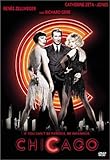
So I found it on YouTube. “Mr Cellophane” is from the musical “Chicago,” which originally played Broadway in 1975. When Ben Vereen sings it, the song becomes about race (shades of Invisible Man).

But initially, it seemed to me a song called Mr Cellophane would be about a serial killer. The first verse would be about how no one pays attention to him, including a girl love-interest the song introduces. The chorus is about how he’s called Mr Cellophane; because he’s invisible.

Then the next verse would be about how he stalks the girl, and about how he uses cellophane to suffocate her, and how he feels as he watches her dying through the clear plastic.

The next verse is about killing a ton more people with cellophane. A little imagery about cellophane here.

Then the last verse is about how he goes home to his empty apartment and kills himself with cellophane.

This is random but originally this came up through another Muppet Show connection, the song “You’re the Top.” When Kermit and Ethel Merman performed it in episode 122 of The Muppet Show, they squabble a bit about whether being called “The Colleseum” is a compliment.

I heard a Ginny Sims recording of it that passed into the public domain recently. Originally appearing in 1934’s “Anything Goes,” the song lists a bunch of things that at the time were awesome.

And one of them is cellophane! There we go.
How many 5 year olds could you take in a fight?

So you know there’s that thing “how many 5 year olds could you take in a fight?”

People always estimate something ridiculously large, usually because they haven’t ever been babysitting or taught kindergarten. “I could take thirty 5-year-olds!” Stupid.

Then I start baiting them, piling on crazy limitations, like “what if I get to train them ahead of time?” and “do I get to pick the 5 year olds?”

So I’ll bid you down to… four.

Here’s my four entries.

And now a word from our sponsor: WSDL

You’ll be happy to know that a WSDL document defines the following elements for describing services:

  • Types — data type definitions
  • Message — an abstract definition of the data being transferred
  • Operation — an abstract description of a service procedure
  • Port Type — an abstract set of operations supported by one or more endpoints
  • Binding — a concrete protocol and data format for a given port type
  • Port — a single endpoint defined as a binding and a network address
  • Service — a collection of related endpoints or ports